ServiceNow Integration Use Cases: How Enterprises Connect Systems for Smarter Operations
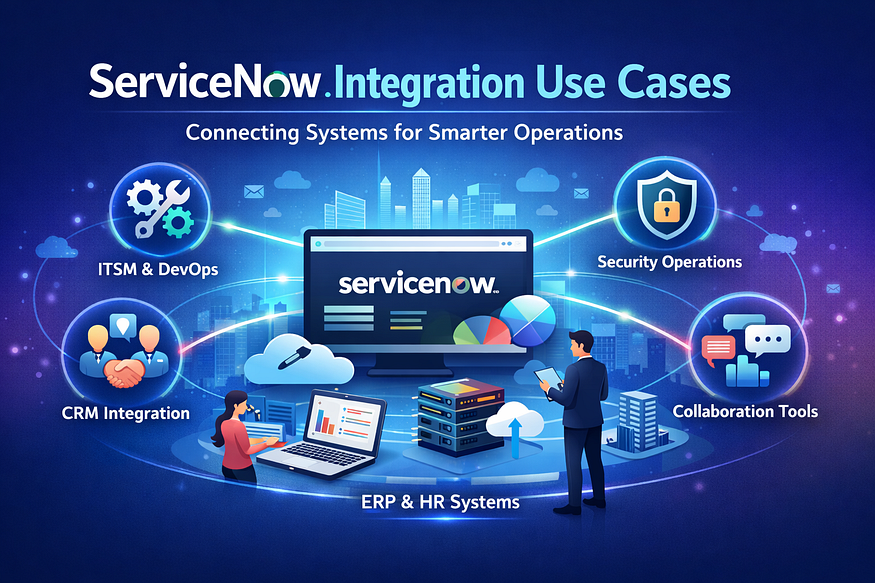
Modern enterprises rely on dozens of digital tools - CRM platforms, cloud infrastructure, DevOps tools, and security systems. When these tools operate in silos, productivity drops and decision-making slows down. This is where ServiceNow integration becomes essential. By connecting ServiceNow with enterprise applications, organizations create a unified workflow that improves automation, visibility, and efficiency.
1. ITSM and DevOps Integration
One of the most common ServiceNow integration use cases is connecting IT Service Management (ITSM) with DevOps tools such as Jira, Azure DevOps, or Jenkins. When development teams deploy new code, the integration automatically updates change requests and incident tickets in ServiceNow. This alignment improves release management, speeds up deployments, and ensures compliance with IT governance policies.
2. CRM Integration for Customer Support
Many organizations integrate ServiceNow with CRM platforms such as Salesforce to bridge the gap between support and sales teams. When a customer issue is logged in the CRM, ServiceNow can automatically generate an incident or service request. This ensures faster response times, better communication between teams, and a complete view of customer interactions.
3. Security Operations Integration
Security teams often integrate ServiceNow with monitoring tools like Splunk or endpoint security platforms. When a security alert is triggered, ServiceNow automatically creates an incident and assigns it to the appropriate team. This automation helps organizations detect threats faster, track incidents efficiently, and improve overall cybersecurity posture.
4. Collaboration and Communication Tools
Integration with workplace tools such as Slack or Microsoft Teams allows employees to create or update ServiceNow tickets directly from chat. Notifications, ticket updates, and knowledge articles can also be accessed within the collaboration platform, reducing context switching and improving productivity.
5. Enterprise Systems and ERP Integration
Another powerful use case is connecting ServiceNow with ERP and HR systems such as SAP, Oracle, or Workday. These integrations automate processes like employee onboarding, procurement approvals, and financial workflows, ensuring data consistency across departments.
Final Thoughts
The real value of ServiceNow lies in its ability to integrate with the broader enterprise ecosystem. From DevOps pipelines to CRM systems and security tools, these integrations eliminate manual work, improve data accuracy, and create seamless digital workflows. As organizations continue their digital transformation journey, ServiceNow integration use cases will play a crucial role in building connected, intelligent enterprises.
Comments
Post a Comment